




What is cryotherapy?
Cryotherapy simply means using cold on the body. In the wellness and recovery world, the term usually refers to whole-body cryotherapy (WBC), sometimes called cryostimulation: you spend two to four minutes in extremely cold, dry air, typically between -85 °C and -110 °C. Because the air is dry and the exposure short, the cold is surprisingly tolerable.
There are several formats you will come across:
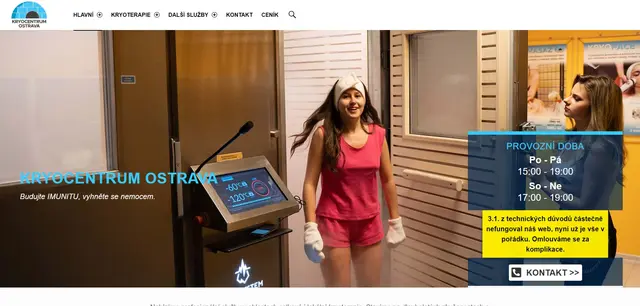
- Electric cryo chamber – a walk-in cabin cooled by compressors. You enter with your whole body, head included, often after a short stop in a pre-chamber at around -60 °C. The cold is very even, and most of the published WBC research was done in this type of chamber.
- Nitrogen cryo sauna (partial-body cryo) – a single-person cabin filled with vaporised liquid nitrogen. Your head stays outside above the rim, the temperature around the body can drop below -130 °C, and sessions are usually a bit shorter.
- Local cryotherapy – a cold-air or nitrogen nozzle directed at one area such as a knee or shoulder.
- Cryo facials – a cosmetic application of cold air or vapour to the face and neck.
- Ice baths and cold plunges – not cryotherapy in the strict sense, but the closest relative: water at roughly 3–15 °C for a few minutes. Water extracts heat far faster than air, so the cooling goes deeper into the tissue.
How a session works
Your first visit usually starts with a short health questionnaire and, at good centers, a blood pressure check. You change into dry clothing: shorts or swimwear, socks, gloves, a headband or hat covering the ears and, in electric chambers, a mouth-and-nose mask. Skin must be completely dry, and jewellery, glasses and contact lenses come off.
Inside the chamber you keep moving slowly – walking on the spot, flexing your hands. Staff watch you through a window and you can leave at any moment. Most first-timers start at the lower end of time and temperature; regular users typically do two to three minutes in an electric chamber.
The sensation is intense but short: a sharp, prickling cold on the skin, a fast breath, then a feeling of alertness. Afterwards the skin is red and warms up quickly; many people do light exercise or a short walk to rewarm. Including changing, plan 20–40 minutes for the first visit and less for later ones. Athletes often use it after hard training days, wellness users one to three times a week, and some centers offer intensive blocks of ten to twenty sessions over a few weeks.
Who uses it
- Athletes and active people who use cold as part of their recovery routine after training or competition.
- People looking for a short, strong stimulus – many describe the post-session feeling as energising and mood-lifting.
- Wellness and longevity enthusiasts who combine cold with heat, breathwork, compression or red light.
- Beauty clients who book cryo facials.
In some countries whole-body cryotherapy is also used inside rehabilitation clinics under medical supervision. That is a different setting from a wellness center, and medical questions belong with a doctor.
What does research say?
There is a lot of research on cold for recovery, but the picture is more nuanced than marketing often suggests.
- A Cochrane review on whole-body cryotherapy and muscle soreness (Costello et al., 2015) found too few high-quality studies to say whether WBC reduces muscle soreness or speeds recovery after exercise, and called for better trials.
- A meta-analysis comparing recovery techniques (Dupuy et al., 2018) ranked cold water immersion and WBC among the methods associated with lower perceived soreness and fatigue, with massage also performing well.
- A 2025 meta-analysis of 11 randomised trials (He et al.) examined inflammatory markers and reported reductions in some markers after WBC, while noting that study sizes and protocols vary widely.
- A narrative review in Frontiers in Physiology (Lombardi et al., 2017) describes WBC more as a physiological stimulus – affecting circulation, hormones and the nervous system – than as a therapy in itself.
Studies have also looked at sleep, mood and wellbeing, but these are mostly small. A fair summary: cryotherapy is a well-tolerated recovery tool that many people find helpful, the evidence for specific effects is mixed, and it should not replace training load management, sleep or medical care. Some sports scientists also discuss whether frequent cold right after strength training might blunt certain training adaptations, so timing matters.
Safety and contraindications
Done properly, whole-body cryotherapy is generally well tolerated. A scoping review on WBC safety (Legrand et al., 2023) found that reported adverse events were rare and often linked to procedural mistakes such as wet skin, missing protective clothing or sessions that ran too long.
Common, short-lived reactions include skin redness, shivering, a rise in heart rate and blood pressure, and occasionally a headache. Rare problems include cold burns on the skin, especially on damp areas or under jewellery.
Do not use cryotherapy, or talk to a doctor first, if any of these apply:
- uncontrolled high blood pressure, heart disease, a recent heart attack or stroke, or heart rhythm problems
- Raynaud's phenomenon, cold allergy (cold urticaria), cryoglobulinaemia or other cold sensitivities
- circulation disorders or a history of blood clots
- severe asthma or respiratory problems triggered by cold
- pregnancy
- acute infection or fever, open wounds or skin damage in the area
- reduced sensation in the skin, for example from nerve damage
- claustrophobia (an open nitrogen cabin may be easier than a closed chamber)
Never enter with wet skin or sweat, and never use a nitrogen cabin without supervision – nitrogen displaces oxygen, so the head must stay above the vapour.
Costs
Prices vary a lot by country, city and type of facility. As a rough guide:
- Single whole-body session: typically around €25–60 in Germany, often more in big-city premium studios and in Switzerland or the UK.
- Packages: ten-session cards usually bring the per-session price down noticeably.
- Memberships: many centers offer monthly flat rates for regular use, sometimes bundled with compression, infrared sauna or red light.
- Local cryo and cryo facials are usually priced separately and can be cheaper than a full-body session.
Introductory offers are common; check what is included, such as socks, gloves and a warm-up area.
How to choose a provider
- Ask which system is used: electric chamber or nitrogen cabin, and what temperature and duration they work with.
- A health questionnaire before the first session is a good sign; a blood pressure check is even better.
- Staff should supervise every session and explain how to stop at any time.
- Protective clothing (gloves, socks, ear cover, mask where needed) should be provided or required.
- Hygiene matters: clean, dry surfaces and fresh or properly cleaned accessories.
- Good centers start beginners on shorter sessions and adjust gradually.
- Be wary of providers that promise to cure conditions or guarantee results.
- Check that pricing and package terms are transparent.
FAQ
How cold is a cryo chamber?
Electric whole-body chambers typically run between -85 °C and -110 °C, while nitrogen cryo saunas can get colder around the body. Because the air is very dry, it feels less harsh than you might expect.
How long does a session last?
The time in the cold is usually two to four minutes. Including check-in, changing and warming up, plan 20–40 minutes.
Is cryotherapy the same as an ice bath?
No. Both use cold, but an ice bath uses water, which cools the body faster and deeper over a longer time. Cryotherapy uses very cold, dry air for a much shorter time.
How often should I go?
There is no single standard. Many regular users go one to three times a week, and some centers offer intensive blocks. Start slowly and see how your body responds.
Can I do cryotherapy if I have high blood pressure?
Cold briefly raises blood pressure, so uncontrolled hypertension is a reason not to use it. If you have any heart or circulation condition, talk to your doctor before booking.
What should I wear?
Dry shorts or swimwear, socks and closed shoes or clogs, gloves and something covering your ears. Most centers provide the accessories; remove jewellery and make sure your skin is dry.